Science Fair Project Ideas For Elementary Students: How to Choose the Perfect Experiment
Ah, science fair season. Students get so excited, and they should be. It is a fantastic way to explore the world around you. The hardest part is getting started with an idea. They may get stuck at this stage or develop ideas that are not possible. Below, we list steps to help students take a broad topic and turn it into a realistic science fair project. The goal is to narrow it down to a testable question that isn't too complicated and interests the student. We want our budding young scientist to take ownership of their idea.

Step 1: Observe the World Around You
A science fair project starts with a question. Let's write questions about the world around us. We want to keep this simple for elementary students, especially K-2nd grade.
Choose a location, observe, and ask questions. They should pick an area of interest. If they enjoy basketball, go to a basketball game. Do they like to bake? Observe and ask questions about what is in the kitchen pantry. Opening the refrigerator can create a lot of curiosity and questions. Do they want to do something with plants? Observe a park or your own backyard and garden. Students can even open their closet and ask questions about their toys.
Here is an example.
1. Open your fridge and look inside. What do you see? Milk, eggs, cheese, bread, ketchup, butter, vegetables, and some moldy food. Create a list of questions. Why is milk white? What is the difference between 2% and whole milk? Why are eggs shaped that way? Why do I use eggs when I bake? How do you make butter? Where did the mold come from? What is mold? Why is it hard to get ketchup out of a bottle?2. Now, look at the questions. Which ones are testable, or could I make them testable? I could search for an experiment on the difference between milks. I could do baking experiments with eggs. I could grow mold on different foods. I could test various methods for removing ketchup from a bottle.3. Now that you are thinking, which topic are you most interested in? The student decides they want to bake. They really love baking, and they know it would be fun to test eggs in baking. The broad topic is baking with eggs.
Step 2: Narrow the Topic to One Specific Area
Baking with eggs is still broad. The student may need to do research. We want to narrow it down to something that seems manageable and that they will be curious about. It must also fit our budget and be age-appropriate.
If they chose basketball, they may have narrowed it to exploring the basketball.
For our baking example, we want to narrow it down to a specific type of baked good—pancakes, brownies, cookies, etc. This student loves brownies.
Step 3: Check that the Topic is Appropriate.
1. Can the student take ownership of the project and perform most of the steps? For K-2, this is a great project. They can crack the eggs, measure and add ingredients, stir, and taste test. Adults should be present to help operate the oven. For 3rd -5th grade, they should be able to perform all of the steps with adult supervision.2. Is it safe? Think about the materials and any cautions. The oven would be the biggest factor. An experiment with a basketball is very safe. Some experiments, such as vinegar and baking soda, require safety precautions, but you can easily find trays, safety goggles, and gloves at the store.3. Can we afford the experiment? Create a realistic budget. If you are growing plants, do you have enough money for soil, seeds, plants, and cups or pots? For an experiment on brownies, do you already have a lot of the supplies? Baking experiments do not need to be pricey.4. How much time will the project take, and how much time do we have? Complete a baking project on a free weekend or bake a batch on several different nights. Is your child in a sports league? If you are busy with sports, music, or other activities, consider how much time you have. Setting up plants may take 2 hours, but the experiment involves just watering them every other day. An experiment that involves building something may not work if you know you are busy. Making pancakes might be easier than brownies because you can easily make a couple of batches and cook them in an afternoon.
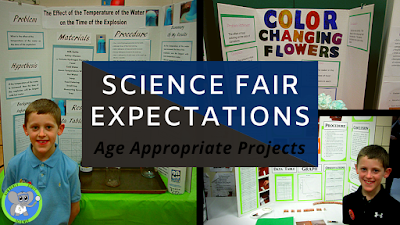
It is okay to find an experiment or topic online. Experiments are meant to be repeated to see if you get the same results. To make it original, try changing something different. Step 4 can help with this.
Step 4: Designing Your Specific Question and Experiment.
We have narrowed our topic; now we will narrow it further by creating our specific question. It is not as difficult as it sounds. It takes 4 simple questions. We call it the Four Question Strategy. The student may need to conduct research to answer question one.
1. What does my topic do or how does it act? I am using eggs in baking brownies. Brownies are brown, gooey, and crunchy on the edges. They start as a thick liquid. They rise in the oven.2. What supplies are needed for the topic? (an experiment with eggs in baking brownies?) I need flour, sugar, chocolate, eggs, baking powder, salt, etc. Or I could use brownie mix.3. How can I change the ingredients? If the student doesn't know what to change, look at each material or ingredient. For a basketball experiment, they could change the size, the amount of air, or the brand of the ball. For our brownie experiment, the student already knows they are exploring eggs. It is okay if they change their idea at this step.
Eggs: Brand, Amount, Size, Type, eggs or egg whites, With or without eggs for kindergarten is fantastic!
Flour: Brand, Amount, Type (brown, white, blue eggs or free range, cage free, regular)
Sugar: Brand, Amount Type
Salt: With or without, type, amount
Chocolate: Type, amount, brand
4. What can I measure to see how my change affects my topic?Measurements can be actual measurements, quantitative, or qualitative data. Choose a technique that the student can do well on their own or with minimal help.
For basketball, you could measure how high the ball bounces or how many baskets you can make in one minute with each ball.
There are lots of things to measure when baking.
The height of the brownies, how soft the brownies are, how well they hold together, rank how well they taste, how long it takes to bake, etc.
The height of the brownies, how soft the brownies are, how well they hold together, rank how well they taste, how long it takes to bake, etc.
Click here for a FREE
Four-Question Strategy and Project Timeline.

Step 5: Write and Review the Question.
Now look at your list. Choose one thing to change from question 3 and one thing to measure from question 4.
Turn that into your question.
How does the number of eggs affect the height of a brownie? How does the number of eggs affect the softness of brownies? What does the type of egg do to the height of a brownie?
Review the question.
-Do I have enough time to conduct the experiment?
-Is it safe?
-Am I changing only one thing, and measuring only one thing?
-Do I have the supplies or enough money to conduct the experiment?
-Is it age-appropriate?
-Is the student excited about the project, and did they come up with the idea?
Step 6: It's Time to Begin the Experiment.
The student has a clear testable question that they can take ownership of. The idea is original and relevant to their interests. Now, review the fair's requirements and follow the scientific method to develop a hypothesis and conduct the experiment. Remember, this is the student's project. All adults helping are there to supervise appropriately for the child's age.
Check out our complete guides
that guides you step by step from start to finish.


LEARN MORE